Beyond an Epilepsy Diagnosis
Beyond an Epilepsy Diagnosis
A Conversation with Dr. Ellen Millard on Environmental Toxins, Inflammation & Where Healing Begins
Over the past several years, my own journey with Lyme disease, mold illness, and now walking alongside my daughter through epilepsy has completely changed the way I think about health.
Like many families, we initially searched for answers through specialists, medications, and endless appointments. While those all have an important place, I couldn't shake the feeling that we were asking the wrong question. Instead of simply asking, How do we stop the symptoms? I wanted to understand why they were happening in the first place.
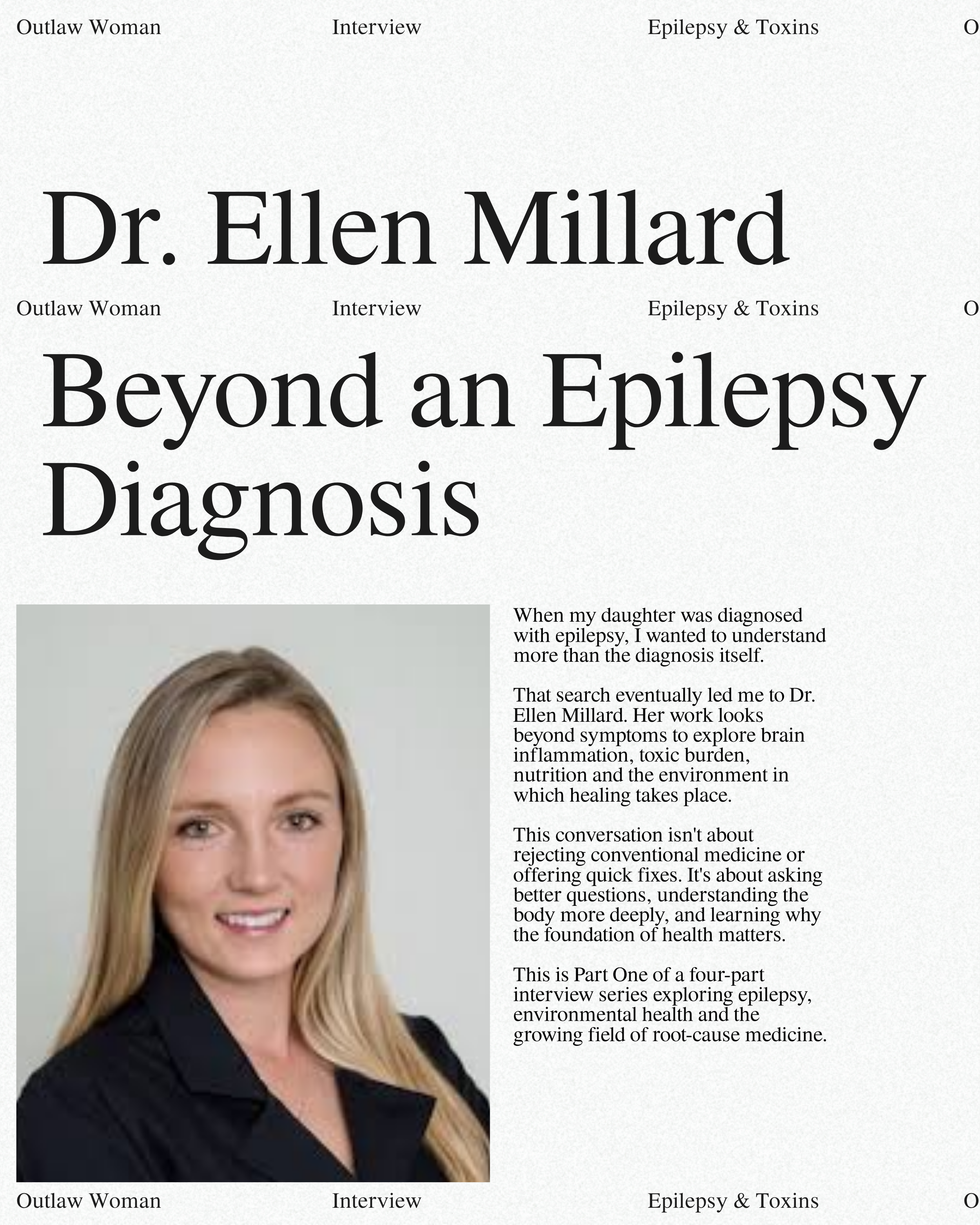
That search eventually led me to Dr. Ellen Millard, a naturopathic physician here in the Vail Valley. Together, we've spent months uncovering environmental factors that conventional medicine rarely discusses, including mold, heavy metals, pesticides, plastics, and other toxins that quietly contribute to inflammation throughout the body.
This conversation isn't about fear. It's about awareness.
It's about understanding how our environment influences our health and why creating the right conditions for the body may be one of the most overlooked foundations of healing.
Kelly Gidney
You often say environmental toxins are one of the foundations of health. Why?
Dr. Ellen Millard
I think of the body as having a bucket of toxins. Our liver is constantly working to clear what we're exposed to every day, and our bodies are designed to handle a certain amount. But once that bucket becomes too full, that's when we begin to see chronic inflammation. Autoimmune conditions, brain inflammation, diabetes, and many other health conditions can begin to develop. In conventional medicine, we often treat each condition individually with medication. In naturopathic medicine, we ask a different question: Why did that bucket overflow in the first place? That perspective isn't commonly taught, so much of our work is helping people understand that removing the burden on the body is just as important as treating the symptoms.
Kelly Gidney
One of the reasons I was so grateful to find you was because there wasn't anyone locally offering this kind of testing who has experience with seizures. After my own experience with Lyme disease, I had already learned how important our environment can be to overall health. When Mia began having seizures, I wanted to understand whether something deeper was contributing. That's when we started environmental toxin testing. Can you explain what that test is?
Dr. Ellen Millard
We used what's called the Total Toxin Test. It's one of the most comprehensive tests I've found because it measures more than one hundred environmental chemicals. It looks at mold toxins, heavy metals, pesticides, plastics, PFAS, fuel exposures, and many other environmental compounds that can accumulate in the body. As naturopathic physicians, we're trained not only to identify these exposures but also to help patients safely reduce them while minimizing future exposure.
Kelly Gidney
When Mia's results came back, they were honestly shocking. We found elevated mold toxins, arsenic, glyphosate, fuel exposure, and several other environmental toxins. What surprised me most was that we already lived what I considered a very non-toxic lifestyle. How common is that?
Dr. Ellen Millard
It's actually more common than people realize. Children are naturally exposed to more environmental toxins because they're constantly touching surfaces, crawling on the ground, putting things in their mouths, and spending more time outdoors. Some exposure is unavoidable. What concerned me wasn't that Mia had toxins. It was how elevated many of them were. Her testing showed multiple mycotoxins from mold, glyphosate, which is the herbicide commonly known as Roundup, fuel exposure, and several heavy metals. These are all exposures we see, but her levels were significantly elevated for a child.
Kelly Gidney
One of the hardest parts for me was realizing that despite everything we were already doing, these toxins were still finding their way into her body. We had already removed plastics from our home, filtered our water, focused on organic food, and tried to create the healthiest environment possible. How does that happen?
Dr. Ellen Millard
Some things simply aren't within our control. Arsenic, for example, can naturally occur in soil and groundwater. Here in Eagle County, it's something we see fairly often because of the geology of the region.Children may also be exposed through pressure-treated wood at parks or playgrounds, contaminated water, or other environmental sources that parents would never think to question. The important thing to remember is that this isn't about perfection. Even families doing everything "right" can have hidden environmental exposures. The goal isn't to eliminate every toxin. It's to reduce the body's overall burden so it has the capacity to heal.
Kelly Gidney
One of the things I've struggled with is how to explain this to other families. People ask how Mia is doing, and I want to explain what we've learned, but it can feel overwhelming because environmental toxins aren't something most people have ever considered. Is there a simple way to help people understand the connection?
Dr. Ellen Millard
I usually begin with inflammation because most people already understand that concept. The brain can become inflamed just like any other part of the body. When enough stressors accumulate, whether that's environmental toxins, viruses, infections, or even physical injury, that inflammation can begin affecting how the brain functions. Reducing those stressors doesn't happen overnight, but every step we take toward lowering the body's overall burden gives it a better opportunity to heal.
Kelly Gidney
For families hearing this for the first time, it can feel overwhelming. Once you realize how many everyday exposures exist, it's easy to think you have to change everything overnight. Where do you tell people to begin?
Dr. Ellen Millard
I always tell people to start with reducing exposure. You don't have to overhaul your life in a weekend. The body is incredibly resilient, and even small changes reduce the burden it's carrying. I encourage families to focus on the basics first. Cleaner water. Better air. More whole foods. Looking at the products you're bringing into your home. Those simple shifts create the foundation for everything else we do. The goal isn't perfection. It's progress. Every step you take gives the body a better opportunity to heal.
Kelly Gidney
I think that's one of the biggest lessons I've learned through all of this. When Mia was first diagnosed, I desperately wanted a single answer. A medication. A protocol. Something that would fix everything overnight. Instead, we've learned that healing is often quieter than that. It's built through hundreds of small decisions that support the body over time. That shift in perspective changed everything for our family. It became the foundation for the conversations you'll read throughout this series.
In Part Two, we'll move from the why to the how, exploring the practical steps families can take to reduce everyday toxin exposure and begin creating a healthier home environment.
Note - This interview reflects Dr. Ellen Millard's clinical experience and perspective as a naturopathic physician. It is intended for educational purposes only and should not be considered medical advice. Every individual's health circumstances are unique. Readers should consult their qualified healthcare providers before making changes to medical treatment, medications, or health protocols.